
Table of Contents
|
CHINA FREE TRADE ZONES (FTZS) & VIETNAM LOGISTICS: THE GUANGXI ADVANTAGE FOR CROSS-BORDER TRADE
1. Introduction: What a China Free Trade Zone Actually Does
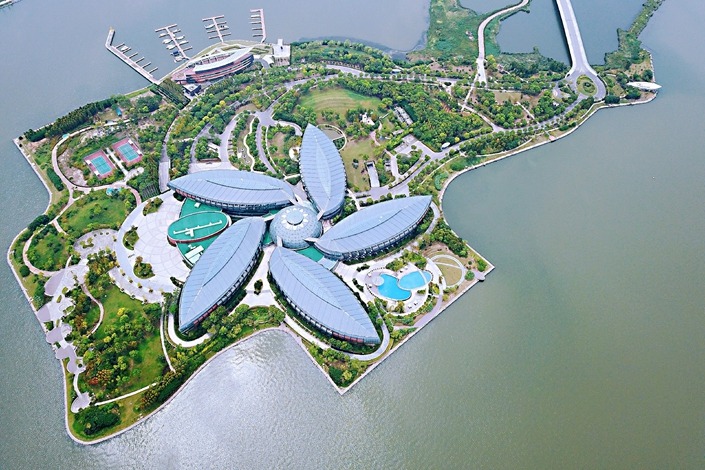
Photo: Caixin Global
A Free Trade Zone (FTZ) is a designated area within a country where goods can be imported, stored, processed, transformed, and re-exported with streamlined customs supervision and preferential policies—typically suspending duties, VAT, and specific licensing requirements until the goods enter domestic circulation. In short: an FTZ is a customs “sandbox” built for speed and flexibility.
China launched its first pilot FTZ in Shanghai in 2013. Since then, the country has expanded the network aggressively, aligning each zone with regional strengths (ports, finance, advanced manufacturing, cross-border e-commerce, land-border trade). As of 2025, China operates 22 FTZs, with Xinjiang the newest (opened November 1, 2023). The network now spans coastal gateways, such as Shanghai, Guangdong, Fujian, and inland hubs (e.g., Henan, Hubei, Shaanxi, Sichuan, Chongqing), as well as capital regions (Beijing, Hebei), and border-facing Guangxi, which directly interfaces with Vietnam.
>> How to Optimize Textile Logistics with VICO's China-Vietnam LCL Consolidation Service
China also elevated Hainan to a full Free Trade Port (FTP)—an “FTZ-plus” model—with island-wide independent customs operations and a zero-tariff framework slated for Dec 18, 2025. That’s a step change for the import/export China FTZ strategy in the south.
No. | Province | Since | Area | Sectors and activities officially encouraged |
|---|---|---|---|---|
1 | Shanghai | 2013 | 240 km² | Finance, bonded logistics, high tech |
2 | Guangdong | 2015 | 116 km² | High-end manufacturing, finance, logistics |
3 | Tianjin | 2015 | 120 km² | Logistics, finance, R&D, high-end manufacturing |
4 | Fujian | 2015 | 118 km² | Tourism, modern service, finance |
5 | Liaoning | 2017 | 120 km² | Logistics, high-tech manufacturing, e-commerce |
6 | Zhejiang | 2017 | 240 km² | Oil and petrochemicals, aerospace, international trade |
7 | Henan | 2017 | 120 km² | Advanced manufacturing, modern logistics, trade |
8 | Hubei | 2017 | 120 km² | Smart manufacturing, IT, high-end equipment |
9 | Chongqing | 2017 | 120 km² | IT, intelligent equipment, modern services |
10 | Sichuan | 2017 | 120 km² | Logistics, warehousing, advanced manufacturing |
11 | Shaanxi | 2017 | 120 km² | High-tech, logistics, trade, finance |
12 | 2018 | 35,400 km² | High-tech, tourism, services, logistics, healthcare | |
13 | Shandong | 2019 | 120 km² | International travel, culture, Artificial Intelligence (AI) |
14 | Jiangsu | 2019 | 120 km² | High-tech industry, tourism (cruises, yachts) |
15 | Guangxi | 2019 | 120 km² | Modern finance, smart logistics, trade |
16 | Hebei | 2019 | 120 km² | Biotech, services, digital trade (media, games) |
17 | Yunnan | 2019 | 120 km² | High-end goods, aviation logistics, tourism |
18 | Heilongjiang | 2019 | 120 km² | New materials, equipment, biotech |
19 | Hunan | 2020 | 120 km² | Manufacturing, e-commerce, logistics |
20 | Anhui | 2020 | 120 km² | AI, high-tech, new energy |
21 | Beijing | 2020 | 120 km² | Tech innovation, trade, biotech |
22 | Xinjiang | 2023 | 180 km² | Trade, logistics, new energy & materials, textiles |
23 | Jilin | 2024 | 118 km² | Intelligent vehicles, ice & snow economy, sci-tech |
Source from ciprocess
2. How China’s FTZs Work: The Benefits That Matter to Business
2.1 Faster, simpler customs—and “bonded first” flexibility
FTZs prioritize paperless declarations, consolidated filings, and single-window customs systems. Shanghai’s pilot introduced third-party inspection acceptance and free trade accounts, cutting dwell times and documentation loops for logistics operators. In practice, this means smoother transshipment, trade processing, consolidation/deconsolidation, and cross-border e-commerce fulfillment.
2.2 Duty/VAT suspension and special tariff regimes
Core benefits include duty and VAT suspension while goods remain in the zone; duties trigger only when goods are released into domestic circulation. These mechanics unlock cash-flow advantages for inventory staging, seasonal buffers, kitting, light assembly, and postponed import decisions—especially valuable for multi-market distribution across Asia.
2.3 Purpose-built for advanced trade models
China’s FTZs have piloted reforms beyond customs, including liberalized services, cross-border finance, data flows, and investment negative lists tailored to specific zones (e.g., data export negative lists piloted in Shanghai/Lingang and Hainan to facilitate compliant cross-border business). For supply chains that rely on real-time platforms and shared services, these institutional innovations are as decisive as tariff relief.
2.4 Scale and specialization
Each FTZ focuses on a specific theme: Shanghai for finance and trade facilitation, Guangdong for manufacturing and trade, Tianjin for shipping and advanced industries, Hainan for duty-free consumption and services, Xinjiang for land-bridge logistics into Central Asia, and Guangxi for ASEAN-facing multimodal corridors via the Beibu Gulf and Vietnam border. This specialization allows companies to select an FTZ that matches their modal mix and market access needs.
3. Key FTZ Locations (with Logistics Angles)
●
Shanghai FTZ (incl. Lingang): China’s flagship for single-window trade, cross-border finance, multi-modal port/airport connectivity, and e-commerce models backed by bonded warehousing. Ideal for high-velocity import export China FTZ workflows and value-added services.
_KuFhocAQZ.jpg)
Photo: China daily
●
Guangxi FTZ (Nanning, Qinzhou Port, Chongzuo): China’s ASEAN gateway. Qinzhou anchors the New Western Land-Sea Corridor (rail-sea), while Chongzuo (Pingxiang/Youyi Guan) enables land border flows with Vietnam. Ongoing “smart border” upgrades target 24/7 customs, reducing truck wait times and doubling daily clearances compared to 2019.
 pilot-free trade zone-in-2023-VICO-Logistics_8NOzbNGae.jpeg)
●
Xinjiang FTZ (Ürümqi, Kashgar, Khorgos): China’s 22nd FTZ, a 179.66 km² tri-area platform launched Nov 1, 2023, positioned for westbound rail/road and Central Asian trade. Relevant to Vietnam-origin goods transiting China toward Eurasia via inland rail.
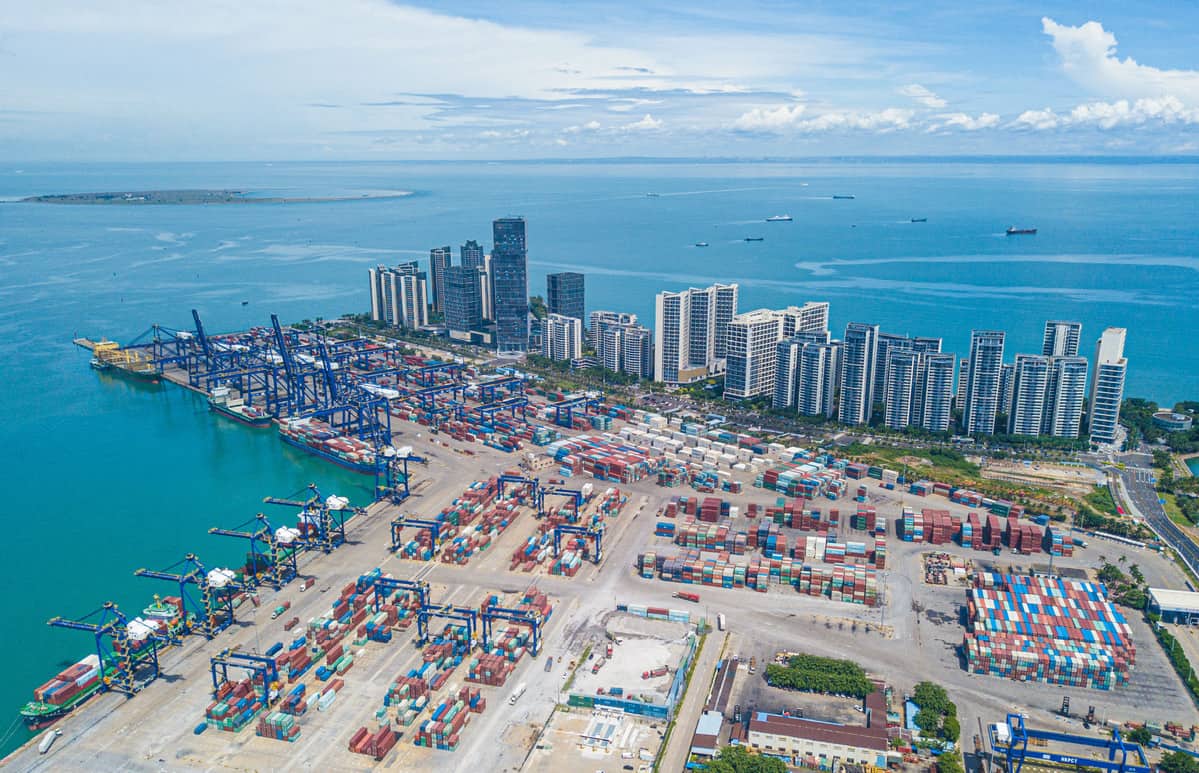
Photo: Daily China
●
Hainan Free Trade Port: From Dec 18, 2025, independent customs and broad zero-tariff coverage (moving from positive lists to a negative-list logic). Strategic for duty-free consolidation, consumer imports, and services trade.
4. Why FTZs Matter for China–Vietnam Trade Logistics
4.1 The Guangxi advantage: land + sea, digitized
Youyi Guan (Friendship Pass)—opposite Hữu Nghị (Lạng Sơn)—is being upgraded into China’s first cross-border smart border gate. Reported results already show average truck wait reductions of ~3.5 hours and daily clearances reaching around 3,300 trucks in 2024, about twice the 2019 levels—a direct benefit for fresh produce and electronics lanes. In parallel, Beibu Gulf (Qinzhou) is scaling automated container terminals and rail-sea feeders that stitch inland provinces to ASEAN markets.
What this means for shippers:
●
Faster turns on northbound fruit/seafood into China and southbound electronics into Vietnam.
●
Flexible staging in Qinzhou’s bonded facilities for multimarket distribution, deferring duties until the final market is chosen.
●
Resilience via modal substitution—shifting between land border, rail-sea, and ocean based on congestion or cost.
5. Current Policy Signals to Watch (2024–2025)
●
Hainan FTP customs closure (Dec 18, 2025): Switches to negative-list treatment with wide zero-tariff coverage inside the first line, tightening the “special customs area” logic for the island. Expect duty-free expansion and digitized supervision—useful for consumer brands and bonded distribution.
●
Data export facilitation in FTZs: The Shanghai FTZ/Lingang and Hainan FTP have published data export negative lists to streamline compliant cross-border operations—critical for logistics platforms that synchronize inventory, telematics, and trade documents with overseas systems.
● Xinjiang FTZ operationalization: Deepening rail/land logistics, as well as bonded aviation fuel pilots, underscores westbound logistics liberalization, complementing southbound ASEAN routes.
6. China FTZs vs. Vietnam (and Wider Asia): What’s Different?
Vietnam’s regime centers on Industrial Zones (IZs), Economic Zones (EZs), and Export Processing Zones (EPZs). EPZs/Export Processing Enterprises (EPEs) enjoy tariff-free inputs for exports, VAT exemptions, and segregated customs control—functionally similar to a free trade zone for manufacturing exports, but less oriented toward transshipment and trading than China’s pilot FTZs. Vietnam’s Decree 82 defines EPZs and clarifies that they are treated similarly to free trade zones under the duties law.
Singapore operates classic entrepôt-style FTZs at ports and airports where duty/GST is suspended until goods enter local consumption; no import permit is needed for certain FTZ operations—excellent for transshipment, consolidation, and hubbing.
Malaysia has Free Zones/Free Industrial Zones under the Free Zones Act (1990), offering duty/tax relief for qualifying processing and logistics activities with clear customs governance. Thailand offers Free Zones and BOI-linked incentives for export-oriented manufacturing, with VAT relief available within these zones. customs.gov.my+2DHL+2
6.1 What’s distinctive about China’s FTZs:
●
Institutional experimentation (finance, data, services) layered on top of bonded mechanics—especially in Shanghai and Hainan.
● Scale and diversity of zones (22, including border-centric FTZs like Guangxi and Xinjiang) to support ASEAN and Eurasian land-sea corridors.
●
Rapid digitization of border processes at land gates with Vietnam, cutting cycle times and enabling 24/7 customs.
7. Practical Use Cases for China–Vietnam Supply Chains
- Seasonal agri flows (northbound): Stage fruit in Chongzuo/Pingxiang bonded areas; clear faster with smart-gate scheduling; push to Guangxi/Guangdong wholesale while deferring duties until domestic entry.
- Electronics & components (southbound): Consolidate in Shanghai FTZ or Qinzhou bonded parks, perform light kitting/labeling, and release by truck to Bắc Giang/Bắc Ninh manufacturing hubs via Youyi Guan with reduced wait times.
- Consumer brands into China’s duty-free channels: Use Hainan FTP to pilot duty-free retail/fulfillment as zero-tariff mechanics expand under the customs-closure regime.
- Westbound diversification: Route Vietnam-origin goods through Chongqing/Chengdu → Xinjiang FTZ → Central Asia/EU on rail for lead-time hedging.
8. Risks and How to Mitigate Them
● Scope creep on “free” claims: Duty-free doesn’t equal compliance-free. Product-specific controls, licensing, and standards still apply—especially for sensitive categories. (Singapore/Malaysia practice underscores these boundaries.) VICO builds checklists by HS code and FTZ to avoid surprises at release.
● Policy fluidity: FTZ negative lists and pilots evolve (e.g., data export rules). VICO monitors zone-specific circulars and adjusts SOPs accordingly.
● Operational bottlenecks: Border-gate throughput is improving but can spike seasonally. VICO uses time-of-day slotting and buffer staging in bonded parks near the gate to smooth peaks.
9. Conclusion: FTZs as a Competitive Edge for China–Vietnam Trade
For B2B shippers, China Free Trade Zones are less about “tax breaks” and more about time, optionality, and institutional plumbing. The combination of bonded flexibility, single-window customs, and digitized land borders (notably in Guangxi FTZ) is reshaping China–Vietnam trade logistics. Add the upcoming Hainan FTP customs closure and new Xinjiang FTZ routes, and you get a wider, faster network to stage inventory, delay tax events, and match modes to cost and risk.
VICO’s role is to operationalize this: stitching together border-smart trucking, bonded value-add, paperless filings, and multimodal design—so you capture the benefits of FTZ in China without tripping over the fine print. If your 2025–2026 plan involves expanding import export China FTZ footprints or accelerating China–Vietnam trade logistics, the window is open—and the playbook is ready.
This article is part of VICO’s ongoing series on global trade and logistics trends—stay tuned for more insights on the policies and practices shaping supply chains across Asia.
Learn more our other articles at
Future of Logistics Da Nang: Free Trade Zone & Vietnam IFC Opportunities for Investors
List of Major Shipping Ports in Vietnam and How to Choose the Best Port for Your Business
----------
VICO Logistics – Your Indochina Expert
Premium member of Eurocham, JCtrans, VICOFA, VITAS... associations
Owned offices: Hong Kong (headquarters), China (Shenzhen, Shanghai), Vietnam (Ho Chi Minh, Da Nang, Hai Phong).
Youtube - Linkedin - Fanpage
Follow us for more valuable information
Book now: https://vico.com.hk/#quotation
Contact us:
- Email mkt4_hcm@vico.com.hk (For business development)
- Hotline: Zalo/Whatsapp: (+84)901877108
- WeChat China: imschylerla (CN/EN)
- WeChat Vietnam: miauyen1577 (VN/EN)